
 Russell Saltzman posted an amusing, perceptive piece on First Things today titled “Time to Admit It: I Live In the Suburbs and Love It.”
“Suburbs have a bad name,” he says, “which is a bit odd what with all the people living in them contentedly. Perhaps that is part of our problem. People like it here and other people know we shouldn’t.” That’s a trenchant observation; Saltzman’s sense of the popular attitude toward the suburbs lines up well with my experience (and frankly, it articulates the attitude I tend to hold as well). Suburbs “sprawl,” evince “poor land use,” stifle creativity, enforce conformity, promote the petty tyrannies of HOAs, and more than likely spread a thin veneer of happiness over a rotting core of middle-class depravity.
True enough, maybe, but Saltzman points out that, for all that, they can be pretty nice places to live – certainly millions of Americans join him in thinking so.
I’ve lived in some reasonably diverse settings – among them a small West Virginia town, the German capital, and, yes, a North Texas suburb (our current home base), so I think I have a decent knack for liking places for what they are. That knack has produced a certain gut-level contrariness that flares up whenever I hear some setting or other idealized or vilified.
In my circles, the idealization usually applies to the city – so much more vibrant and “authentic” and important than the far-flung, samey suburbs – and I remember at least once or twice in seminary pushing back against that tendency. My dad was a small-town pastor for the last seven years of his life, and my respect for that calling has never waned (small towns tend to be forgotten entirely among my ministry-oriented peers). I worried that I may be a bit hypocritical in this, pursuing as I am a call to one of the world’s cities most likely to be labeled “vibrant” or “hip,” but I worry that our godly-enough desire to reach cities and even build a “theology of the city” tends to put those engaging in “urban ministry” on a pedestal.
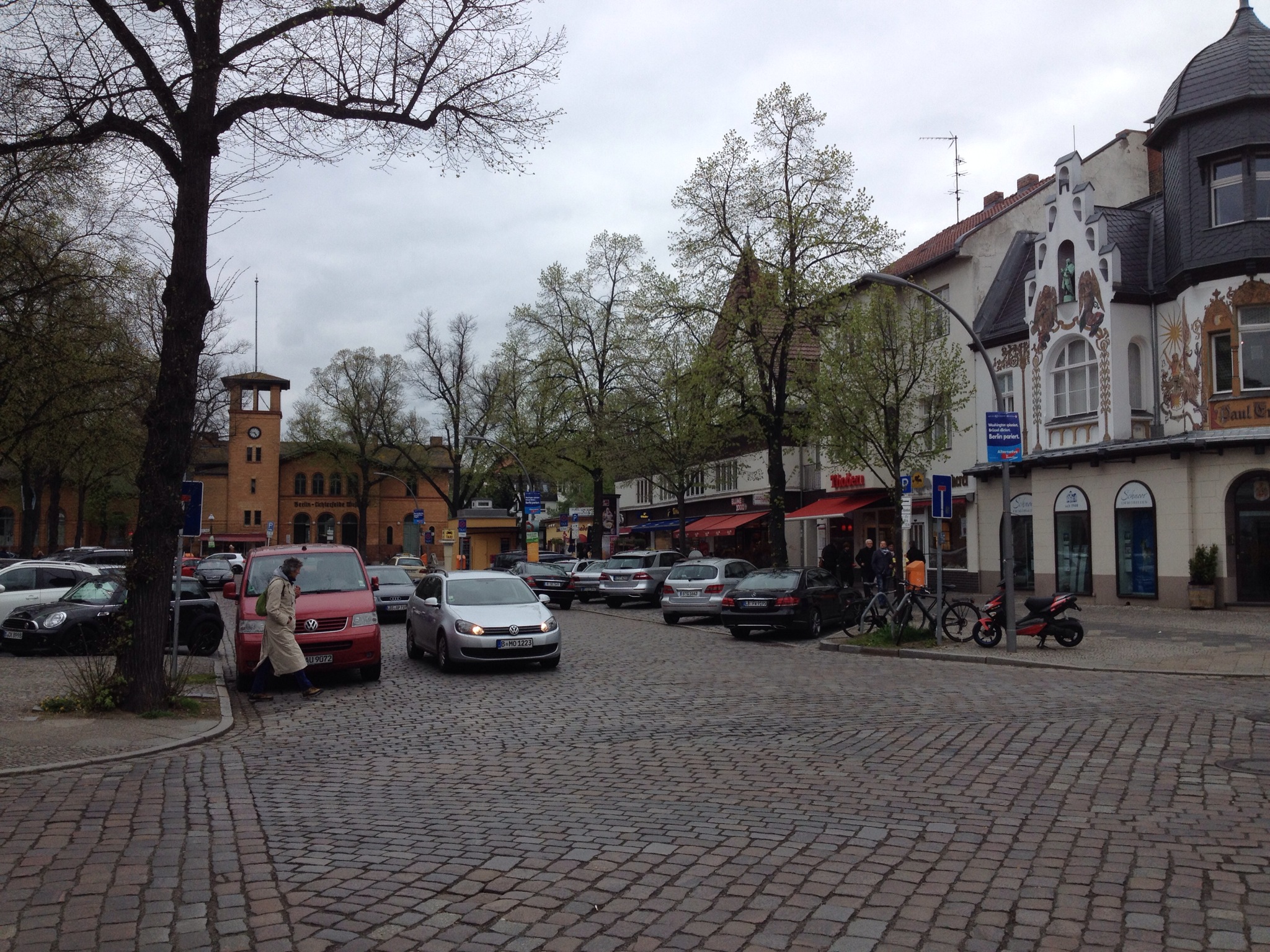
It’s likewise easy to vilify church planting and ministry in the suburbs as the Christian version of “selling out” – it’s no secret that starting up evangelical churches among high concentrations of affluent white conservatives is a fairly safe investment of church-planting resources, and it’s one my denomination is certainly fond of. There’s a contempt mixed with envy: those suburban church plants neglect the poor, avoid uncomfortable diversity – and have a far easier time reaching financial self-sufficiency and getting volunteers for their ministries. It’s enough to make me a little ashamed to be moving to an area of Berlin that’s not that “urban” compared to some of its bohemian, immigrant-heavy inner-city neighborhoods.
All of this is simply envy, adaptable and virulent. Even a cursory read through Paul’s letters to the Corinthians ought to tell us that different people are made for different places, different roles in the local and global church, different mission fields. We despise those who have it easier than we do – whether because their ministry is trendy and sexy and thus easier to get funding for, or because it’s easier to get things off the ground without needing years of support from outside.
So I feel convicted of the need to emphasize that neither we nor our teammates in truly “urban” settings are doing different work from those reaching developing-world villagers or Bible-Belt suburbanites or anything in between. There is one mission, and we are either engaged in it faithfully or we aren’t: we have to proclaim good news to the poor, liberty to the captives, sight to the blind, the year of the Lord’s favor, the Scripture fulfilled in Christ Jesus. We’re to live as servants of God, honoring everyone, silencing slander by doing good, that our neighbors might glorify God on the day of visitation. What we’re called to, you’re called to, and by prayer we are participants in each other’s work, however far apart geographically, culturally, or socially we find ourselves.
-Ben

